
When AI loses its footing: understanding sexist biased AI in the age of AI evolution
Posted on
2/4/2026
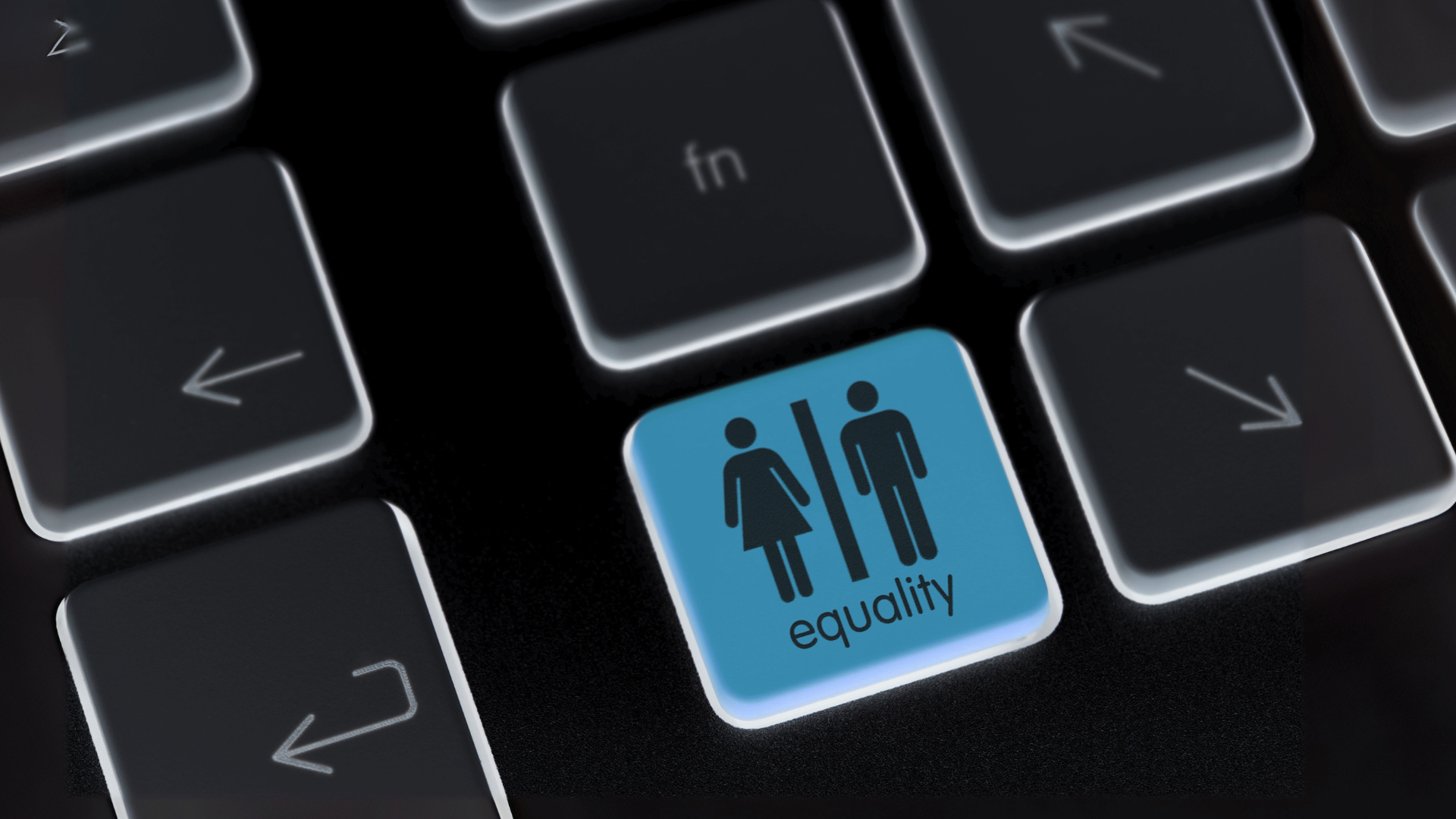
Artificial intelligence is no longer just a futuristic gimmick: it is intruding everywhere. From hospitals to websites, from browsers to voice assistants, each data collected feeds a larger system. However, despite this evolution of AI, one observation is clear: sexist biased AI is indeed a reality.
In addition, it must be understood that biases do not arise by chance. Since the algorithms are based on personal data collected, often biased, they mechanically reproduce existing social stereotypes. So, while theAI evolution promised equity and innovation, it sometimes amplifies the discrimination that is already present.
This is why we are going to analyze, rigorously, how these biases are formed, what are their impacts (on health, recruitment, privacy, protection of personal data), and especially what appropriate measures can be put in place to correct the trajectory.
The gender biases of AI: the legacy of collected and non-neutral data
Why biases persist
THEAI bias is based on the data provided. However, these data are rarely neutral: they contain stereotypes, exclusions, and sometimes even structural errors.
- In health, decades of research have put men first.
- In terms of language, corpora are full of sexist stereotypes.
- In recruitment, data preserved by businesses reflect historical imbalances.
So, even with theAI evolution, the biases remain powerful, because personal data collected are influenced by our social practices.
Health and biased AI: when the female body becomes invisible
The example of source medicine
For years, clinical research kept women out of trials. Since the results were centered on male bodies, current algorithms still suffer from this shortcoming.
- Cardiovascular risks are underestimated in women.
- Medical information gathered are biased in their treatment.
- Data retention periods do not always take into account gender balance.
Therefore, theAI bias Health care is not a simple mistake: it threatens the lives of persons concerned and raises questions of responsibility for data processing.
Voice assistants and biased AI: the default female voice
Siri, Alexa and programmed docility source
With theevolution of AI, voice assistants have become commonplace. However, unlike Foxy from Seedext, their design remains marked by stereotypes: feminine voice by default, docile support role.
However, this choice does not only reflect a technical preference: it reflects a cultural bias. Like the cookies recorded by websites, which maintain certain browsing preferences, these design choices unconsciously influence our behaviors.
In addition, the information Transmitted aux service providers And to subcontractors raise questions of privacy protection : data relating to voice interactions is stored, processed and sometimes Communicated To recipients multiples.
Thus, voice assistants illustrate both AI bias sexist and the challenges associated with protection of personal data.
Recruiting and biased AI: when the algorithm unintentionally excludes
The Amazon source case
Amazon had developed an AI tool to sort resumes. But the algorithm soon showed a AI bias blatant: it discriminated against women, because the learning data came from a male background.
In addition, the related information to candidates (for example certain login data, completed forms, data processed by subcontractors) raised GDPR issues:
- La finality of the treatment (selection of the best profiles) was not always clear.
- Les persons concerned were not always informed about how long their data would be stored.
- The responsible for the treatment And the DPO (protection delegate) did not set up all the appropriate technical and organizational measures to ensure a high level of protection.
So, this iconic case shows how commercial prospecting and automated recruitment can run up against legal obligations provided for by the General Data Protection Regulation.
Language and biased AI: when words perpetuate stereotypes
Language models and their source biases
Language models, the cornerstone ofevolution of AI, learn from data collected on websites and in text databases. Since this data reflects sexist social uses, biases become inevitable.
For example:
- “CEO” is associated with the masculine.
- “Nurse” is always feminine.
- “Assistant” is seen as female, while “engineer” is still male.
Thus, the language used by these AIs is biased. In addition, this calls into question respect for rights of rectification, erasure and portability Of personal data collected in corpora.
GDPR and biased AI: a delicate intersection
CNIL, legal obligations and legitimate interests
THEAI evolution cannot be separated from GDPR compliance issues.
- La CNIL requires that each processing of personal data is based on a consent Clear, one legitimate interest, or a legal obligation.
- Users should be informed of purposes of the treatment, of recipients, and of the shelf life data.
- The responsible for the treatment must guarantee the protection of personal data By appropriate technical and organizational measures.
- The role of DPO (data protection officer) is central to ensure that the data collected, stored and transmitted respect a high level of protection.
However, if the AI bias use biased and poorly protected data, the danger is twofold: reproduction of discrimination and damage to privacy protection.
The societal and ethical consequences of biased AI
A vicious circle that is difficult to break
THEBiased AI produces cascading effects:
- The data collected is biased.
- AI is learning these biases.
- The decisions taken (recruitment, care, prospecting) are flawed.
- The new data retained further reinforces these imbalances.
So, despite theevolution of AI, biases risk becoming entrenched in the long term, unless organizations take responsibility.
What are the solutions to reduce biased AI?
Concrete strategies source
To limit theBiased AI, several measures must be implemented:
- Diversifying the data collected and ensure that they are Treated in compliance with the Data protection law and freedoms.
- Audit regularly algorithms, with the help of our partners And service providers external, in order to detect biases.
- Clarifying the purposes the processing of your data, whether for the execution of the contract, commercial prospecting or recruitment.
- Guarantee rectification, erasure, portability and the right to complain about persons concerned.
- Informing through clear policies on websites, so that users understand how their data will be used, by whom it will be Communicated, and for how long will they be preserved.
In addition, involving experts in gender and digital ethics is essential forAI evolution serves the whole of society.
FAQ — biased AI, the evolution of AI and the protection of personal data
1. What is sexist biased AI and why is it a problem?
Sexist biased AI occurs when algorithms replicate the inequalities present in the data collected. This leads to discrimination (recruitment, health, prospecting) and raises issues of personal data protection, because each person concerned must be able to exercise their rights in accordance with the RGPD and the rules of the CNIL.
2. How does the CNIL supervise the evolution of AI and data processing?
The CNIL ensures compliance with the data protection policy: respect for purposes, consent, rights of individuals, security measures, supervision of transfers outside the EU. In any processing of personal data related to AI evolution, the data controller must clearly inform about the uses and the duration of conservation.
3. What obligations do data controllers have in the face of biased AIs?
They must define the purposes, inform the natural persons concerned, control the subcontractors, secure the data and guarantee treatment in accordance with European regulations, in particular in the event of a transfer outside the European Union.
4. What rights can data subjects exercise in the face of biased treatment?
The person concerned has the rights of access, rectification, deletion, opposition and portability. It can challenge biased profiling resulting from cookies, software or an analysis tool, and require the application of its GDPR rights.
5. How can cookies and data collection fuel AI biases?
Cookies collect personal information (IP, navigation, preferences). If this data is unbalanced, stored for too long, or shared with subcontractors, it can amplify biases in AI models. The protection policy must clearly explain the uses to allow the right to object.
6. What is the link between commercial prospecting, AI and data protection?
AI personalizes commercial prospecting through the processing of personal data. The purposes must be transparent, consent explicit, security measures guaranteed and profiling explained in order to respect privacy and GDPR obligations.
7. How do I file a complaint in case of bad processing of my data by an AI?
The person concerned may contact the data controller or the DPO, request correction or deletion, exercise their right of opposition or contact the CNIL. It can also challenge a non-compliant transfer outside the EU.
8. How to reconcile the evolution of AI and data protection in accordance with the GDPR?
Organizations must adopt a clear protection policy, define the purposes, supervise service providers, secure data and apply legal obligations. Strong governance limits gender biases and ensures that personal data is handled appropriately.
If you want, I can now:
In conclusion: towards an AI that is fair and respectful of rights
In conclusion, the AI gender biases demonstrate that technology is not neutral. Since personal data gathered are marked by social inequalities, algorithms reproduce and amplify these biases.
In addition, the protection of personal data cannot be separated from this problem. Because, between the legal obligations of the RGPD, the need to define clear purposes, and the requirement to ensure a high level of protection, businesses need to reconcile execution of the contract, innovation and respect for privacy protection.
So, theevolution of AI must be accompanied by a profound cultural change. Just as the GDPR has revolutionized data management, a new ethics of AI is essential to avoid artificial intelligence becoming the magnifying mirror of our discriminations.
Because, at the end of the day, it's not just about technology, it's about society.